
Wedding cake ideas for every style and venue
Choosing a wedding cake design starts with understanding your space and the overall mood you’re creating for your celebration. The cake’s appearance should echo the colors in your linens, complement your floral arrangements, and work with the lighting in your venue so the dessert feels like an integral part of the celebration rather than an afterthought. Small design choices like color selection, textural elements, and finishing touches can transform a simple confection into a carefully curated piece that supports and enhances your entire event vision.
Matching cake design to your venue and theme
When you’re planning a formal ballroom reception, clean lines and polished finishes create cohesion with the sophisticated architecture and crystal chandeliers typical of these spaces. A modern wedding in an industrial loft, on the other hand, calls for geometric accents or metallic streaks that mirror the exposed brick, steel beams, and minimalist aesthetic common to urban venues. At a vineyard ceremony, incorporating fruit garnishes, herb sprigs, and wine-inspired color palettes helps the cake reflect the natural terroir and agricultural setting surrounding you.
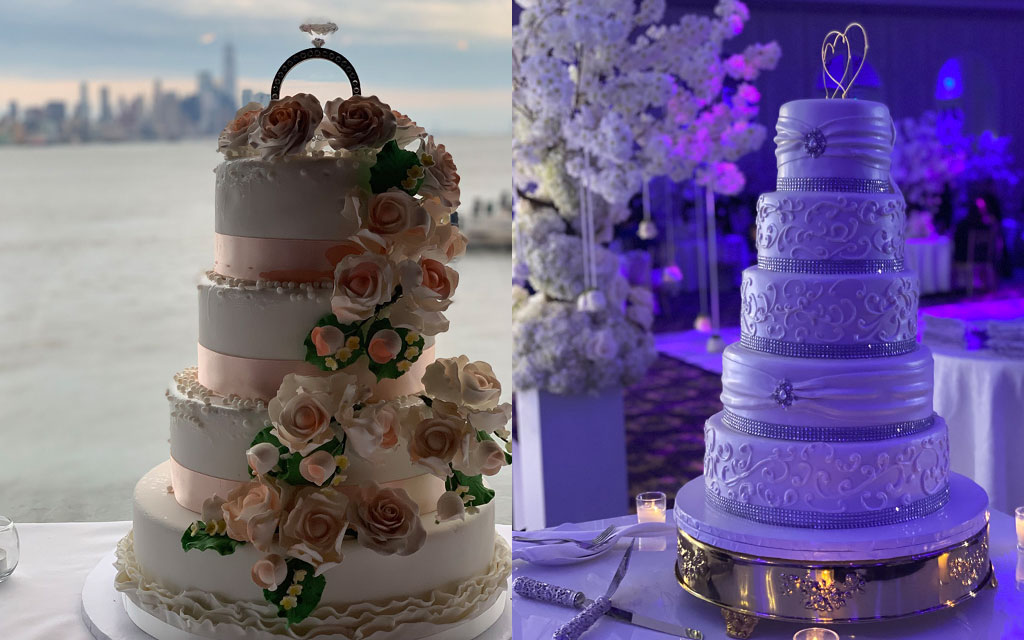
Selecting a style of wedding cake that repeats visual motifs from your ceremony creates the kind of cohesion that guests notice and appreciate, even if they can’t quite put their finger on why everything feels so harmonious. If your invitations featured watercolor botanicals, for instance, consider hand-painted floral elements on your cake tiers. If your ceremony backdrop included geometric shapes or modern architectural details, translate those angles into your cake design. A winter wedding cake benefits from rich textures like velvet finishes, deep jewel tones, and seasonal elements like evergreen sprigs or metallic accents that reflect the season’s elegance.
How to translate a garden wedding or rustic wedding into cake details
A garden wedding benefits enormously from hand-painted florals, delicate sugar blooms, or edible flowers that echo the outdoor blooms surrounding your ceremony and reception. Layering soft pastels in shades of blush, lavender, or sage creates a natural color story that feels organic rather than forced, while botanical motifs in the piping or fondant work reinforce the garden theme without overwhelming the design.
For a rustic wedding in a barn, farmhouse, or outdoor setting with natural wood elements, semi-naked finishes showcase the layers of cake while adding an artisanal, homemade quality that fits the setting perfectly. Textured buttercream applied with visible brush strokes or palette knife marks creates visual interest and depth, while seasonal fruits like figs, berries, or stone fruits add authenticity and a pop of natural color. Wooden cake stands, terracotta accents, and muted color palettes in earthy tones bring boho or farmhouse table settings directly into the dessert presentation, helping each tier read as an intentional part of the larger scene you’ve created.
Small wedding cake ideas versus towering tiered displays
Intimate gatherings of 30 to 60 guests often favor small wedding cake ideas that deliver elegance and visual impact without the excess that comes with feeding 200 people. A beautifully decorated two-tier cake or a single ornate tier with intricate detailing can provide all the style you need while keeping costs reasonable and waste minimal. These smaller designs also allow your cake designer to focus attention on finer details like hand-piped lace patterns, delicate sugar flowers, or metallic painting that might get lost on a larger structure.
Couples who want maximum visual drama and have the guest count to justify it may choose towering tiered displays with cascading sugar flowers, dramatic height that draws the eye upward, and multiple flavor combinations across different tiers. When planning these larger structures, you need to balance scale with practical considerations like guest count, table layout, and the structural engineering required to keep everything stable during transport and setup.
A tall five-tier cake suits a grand ballroom reception with high ceilings and abundant space, but it requires careful structural planning with dowels, supports, and potentially a reinforced cake stand to prevent collapse. A compact, well-decorated cake serves smaller crowds beautifully while keeping your budget in check and ensuring nothing goes to waste at the end of the night.
Choosing cake flavors and fillings that guests will love
Choosing wedding cake flavors is absolutely key to creating a tasting experience that guests remember fondly long after they’ve left your reception. Skilled pastry chefs carefully balance inner flavors and fillings to match a couple’s personal taste preferences while maintaining enough flexibility in the cake’s structure to support the desired aesthetic. Leading cake designers like those at Lāel Cakes and pastry experts like Aumi Aumiller demonstrate how thoughtfully chosen flavors and accommodations for dietary needs come together to create a perfect wedding dessert that satisfies everyone at your celebration.
Popular picks for classic appeal
Vanilla cake and chocolate cake remain perpetually in demand for wedding desserts because they appeal to the widest range of palates and work beautifully with almost any filling or frosting combination. Adding a lemon cake layer brings a bright, refreshing touch that cuts through richer flavors and provides a palate cleanser between courses, while almond cake adds a nutty, sophisticated flavor profile that feels elegant without being overly sweet. Many couples choose to mix these classic flavors across different tiers, allowing guests to select their preference and ensuring that everyone finds something they genuinely enjoy rather than just tolerating whatever arrives on their dessert plate.
Unique and trending flavor ideas
Olive oil cake has surged in popularity over recent years thanks to its incredibly moist texture and subtle fruity notes that work beautifully with citrus curds, fresh berries, or light cream cheese frostings. Carrot cake offers a warm, spiced option that feels particularly appropriate for fall wedding cakes and winter celebrations, with its cinnamon notes and traditional cream cheese frosting creating comfort and nostalgia.. Funfetti cake adds a playful, nostalgic touch that works wonderfully for couples who want to incorporate whimsy into their celebration and match colorful, modern decor schemes. Chocolate chip cake appeals to those who love simple, comforting flavors and want something that feels accessible and crowd-pleasing rather than overly sophisticated or challenging.
Dietary options and sensible swaps
Vegan and gluten-free wedding cakes require specialized recipes, careful ingredient sourcing, and additional testing to ensure the final product delivers on both taste and texture without compromise. Professional bakers strongly suggest scheduling these tastings early in your planning process, ideally at least three months before your wedding day, to allow time for recipe adjustments if the first attempt doesn’t meet your standards. Being transparent about these dietary accommodations with your guests helps everyone feel included and respected, ensuring that the dessert course remains a highlight rather than a source of stress or exclusion.
For larger weddings with diverse guest lists, combining classic crowd-pleasing flavors with one or two trendy or unique options makes it easy for everyone to find something they’ll genuinely enjoy. Scheduling a comprehensive tasting session with your cake baker helps you avoid unpleasant surprises on your wedding day and gives you confidence that the flavors you’ve selected will work together harmoniously when served to your guests.
Designing tiers, shapes, and silhouettes for impact
Choosing the right silhouette for your wedding cake sets the visual tone before guests even taste a single bite. Couples drawn to timeless aesthetics often select classic multi-layer tier cakes that create vertical drama and photograph beautifully from every angle, while those planning modern weddings might prefer sharp lines and geometric silhouettes that feel contemporary and fashion-forward.
Experienced bakers strongly advise matching your cake’s shape to the practical logistics of your event, because temperature fluctuations, transport distances, and venue setup constraints all affect which cake forms will hold up best under real-world conditions. Round tiers travel relatively well and distribute weight evenly, making them the safest choice for venues that require significant transport or outdoor setups where temperature control is challenging. Tall, tapered designs with dramatic height need substantial internal support structures and careful placement on a sturdy, level cake stand to prevent lean or collapse.
Unique shapes create instant focal points on your dessert table and generate the kind of visual interest that translates beautifully in photographs. Two-tone tiers that contrast colors across different levels, angled layers that create asymmetrical visual interest, or stacked squares that feel architectural and modern all draw attention and give your photographer compelling material to work with during reception coverage.
Planning your top tier deserves early consideration because this decision impacts everything from refrigeration requirements to cake-cutting logistics. Some couples choose to preserve their top tier as a keepsake for their first anniversary, following the traditional wedding custom of saving and freezing a small portion of cake, while others prefer to serve every tier to guests and order a small anniversary cake later. This choice affects how your caterer approaches the cake-cutting process and whether special packaging or preservation services need to be arranged before the reception ends.
Small wedding cake designs with modest top tiers work particularly well for intimate events where you need to maximize the number of servings from a compact structure. Professional bakers recommend confirming exact serving sizes during your consultation and requesting a detailed slicing plan that accounts for how each tier will be portioned to ensure you have enough cake for every guest without significant excess.
| Design Goal | Best Shape | Stability Notes | Serving Sizes Guidance |
| Traditional elegance | Round multi-tiered | Simple dowels and plates provide adequate support; travels well in most vehicles | Predictable portions with standard slicing; baker provides exact counts per tier |
| Contemporary statement | Modern geometric silhouettes (squares, hexagons) | Requires reinforced internal supports and perfectly flat, level cake stand | Slice method varies by shape and alters serving counts; confirm specifics with baker |
| Visual drama | Tapered or offset tiers | Needs substantial internal structure and extremely secure transport with minimal movement | Table placement and viewing angle affect how guests perceive servings |
| Intimate or small guest list | Small top-tier cakes atop larger base tiers | Easy to slice with minimal support required for the small tier | Top tier often serves as keepsake portion; verify exact serving sizes for remaining tiers |
Decorations and finishes: from all-white to bold color
The visual finish you select for your wedding cake sets the tone for your entire reception dessert course and creates an immediate impression the moment guests enter the space. Professional bakers consistently advise choosing a finish that genuinely fits your venue’s architecture, your seasonal timing, and your personal story as a couple rather than simply following whatever’s trending on Instagram. A classic white wedding cake works beautifully in traditional settings like historic mansions, hotel ballrooms, and churches where timeless elegance is the goal, while bold, saturated colors allow couples to showcase their unique personalities and create unexpected visual moments.
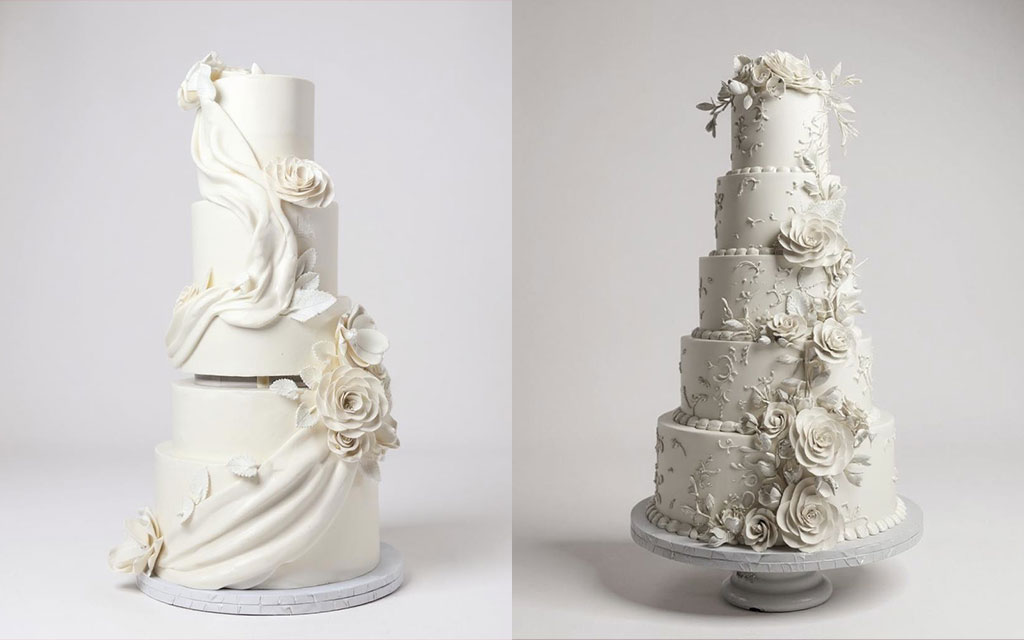
Classic white wedding cake and all-white wedding cake styling
A classic white cake delivers elegant simplicity that photographs beautifully and feels appropriate across virtually any venue type, from casual outdoor ceremonies to black-tie evening receptions. The clean, monochromatic appearance works particularly well in formal spaces like ballrooms and churches where architectural details and existing decor already provide visual interest, allowing the cake to complement rather than compete with its surroundings. This classic approach looks exceptionally polished in photographs and translates beautifully under both natural daylight and warm evening lighting.
Skilled cake designers typically use smooth fondant or perfectly applied buttercream to achieve those sharp, clean lines that define classic white cake styling. Subtle details like precisely piped borders, delicate lace patterns, or a tasteful monogram keep the design timeless and sophisticated without overwhelming the cake’s inherent elegance or introducing elements that might feel dated in ten years when you’re looking back at your wedding photos.
Naked cakes, semi-naked finishes, and textured buttercream
A naked wedding cake works beautifully in rustic settings like converted barns, farm venues, and garden ceremonies where the exposed layers of sponge and filling create an artisanal, handmade aesthetic that feels authentic and unpretentious. These unfrosted or minimally frosted designs showcase the quality of your cake layers and filling choices, allowing guests to see exactly what they’re about to eat. Semi-naked cakes offer a similar visual appeal but include a thin layer of frosting that covers the cake just enough to create stability while still allowing those beautiful layers to peek through.
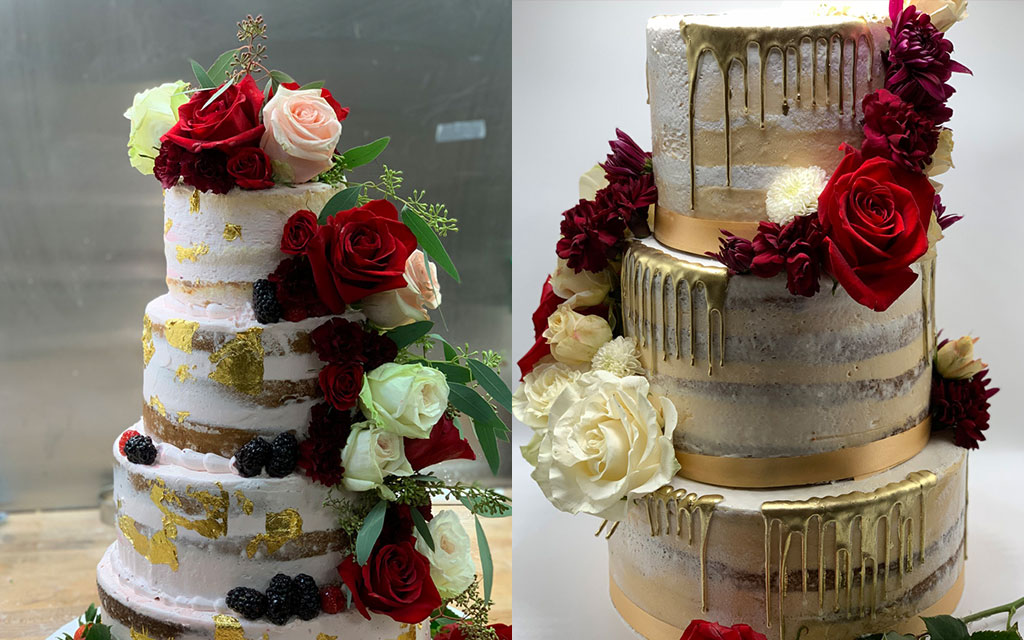
Textured buttercream adds dimensional depth and visual movement to your wedding cake through intentional brush strokes, palette knife work, or deliberate roughness that catches light beautifully and photographs with more interest than perfectly smooth surfaces. This approachable, artisanal aesthetic works wonderfully when paired with fresh fruits, herb sprigs, or loose floral arrangements that reinforce the organic, handcrafted quality of the overall design.
Hand-painted details, metallic accents, and modern cake trends
A hand-painted cake transforms buttercream or fondant into an edible canvas where talented artists use food-safe gels and edible paints to create everything from watercolor washes to detailed botanical illustrations. These custom paintings can match your wedding stationery, echo colors from your bridesmaid dresses, or incorporate meaningful symbols that tell your story as a couple in ways that standard decorating techniques simply can’t achieve.
Metallic accents in gold leaf, bronze painting, or silver detailing add immediate glamour and sophistication to any wedding cake design, creating contrast against matte finishes or complementing other metallic elements in your table settings and decor. Small touches like delicate gold leafing along tier edges or hand-painted metallic borders create elegance without overwhelming the overall design, and these details particularly shine when paired with marble fondant or subtly textured buttercream backgrounds.
For couples drawn to bold statements, color-blocked cakes that feature distinct sections of saturated color create modern, graphic impact that photographs dramatically and creates instant visual interest. Professional bakers strongly suggest testing your chosen colors and finishes well in advance of your wedding day, because certain pigments and metallic treatments react differently to temperature changes, humidity, and transport conditions. What looks perfect in a climate-controlled bakery might appear quite different after an hour in a warm car or several hours in an outdoor venue.
Floral accents: fresh flowers, sugar flower work, and edible flowers
Floral touches can dramatically transform your cake’s overall mood and aesthetic, taking it from romantic and soft to modern and architectural or even dramatic and theatrical based on the specific flowers you choose and how they’re applied. A spring wedding cake naturally lends itself to fresh blooms and pastel palettes that echo the season’s renewal. Skilled pastry chefs carefully coordinate the cake’s floral elements with the venue’s existing arrangements and your bouquet to create visual cohesion that guests instinctively recognize even if they can’t articulate exactly why everything feels so harmonious together.
Pros and cons of fresh flowers on a wedding cake
Fresh flowers add immediate color, natural fragrance, and organic beauty to any cake, making them particularly perfect for garden weddings, outdoor ceremonies, and boho receptions where they naturally extend the live floral installations used in centerpieces, ceremony backdrops, and aisle decorations. The flexibility fresh flowers provide allows for last-minute adjustments and substitutions based on seasonal availability, and they typically cost significantly less than elaborate sugar flower work.
However, fresh flowers require careful coordination between your baker and florist to ensure every bloom is confirmed safe for food contact and completely free from pesticides, fertilizers, or other treatments that could contaminate your cake. Professional bakers use floral picks or food-safe barriers to keep flower stems from directly touching the frosting, and these flowers must be placed on the assembled cake the same day as your reception to ensure they remain fresh, vibrant, and food-safe rather than wilting or contaminating the cake surface.
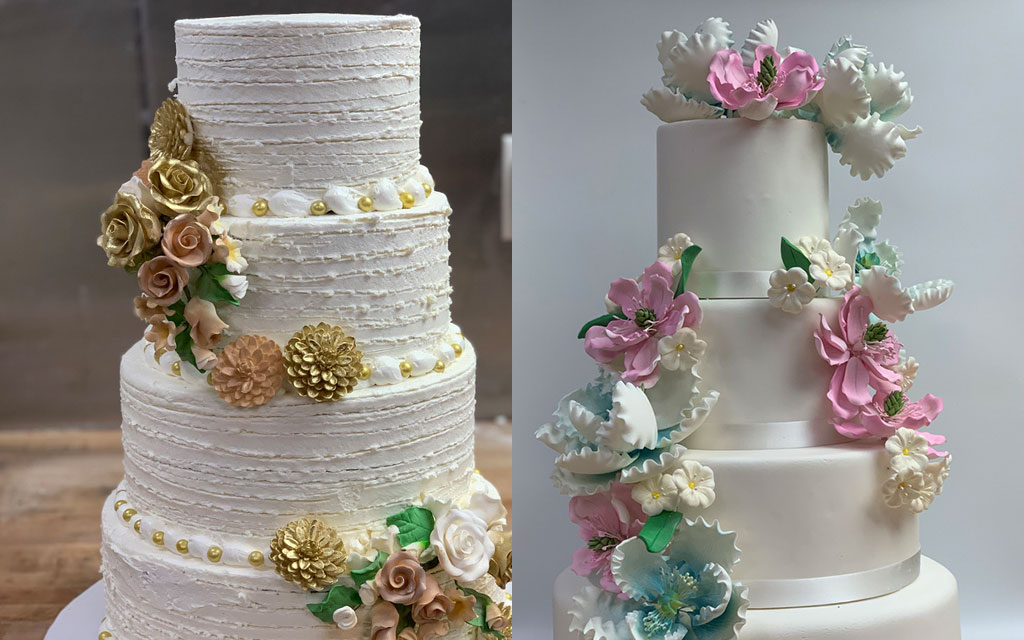
Sugar flowers and detailed floral cascades for vintage glam and garden romance
Sugar flowers are meticulously crafted for maximum durability and incredible detail, with skilled sugar artists able to replicate virtually any flower variety with realistic petals, stamens, and color gradations that often fool guests into thinking they’re looking at real blooms. These edible flowers can be made weeks or even months in advance, allowing your wedding cake designer to work on complex designs without the pressure of same-day assembly, and they hold up beautifully through temperature fluctuations, transport, and hours on display without wilting or losing their appearance.
Sugar flowers arranged in cascading formations create stunning visual drama that works beautifully for vintage-inspired celebrations, romantic garden wedding themes, and classic formal receptions where elaborate detail is appreciated and expected. Professional bakers strongly suggest booking sugar flower work at least six to eight weeks in advance, with that timeline extending to three or four months for complex designs needed during peak wedding season from May through October when every cake shop is operating at maximum capacity.
Color-blocked floral arrangements and bold floral statements
Color-blocked cakes feature distinct sections of solid, saturated color that create modern, graphic impact and work beautifully for couples who want bold visual statements without sacrificing the quality flavors and textures that make a wedding cake genuinely delicious. This contemporary approach particularly suits modern weddings in urban lofts, art gallery venues, and minimalist spaces where clean lines and strong color choices reinforce the overall aesthetic.
Edible flowers can be strategically added to color-blocked designs to soften hard edges, introduce organic elements that balance geometric precision, and create focal points that draw the eye exactly where you want it. Mixing sugar flowers with fresh edible blooms creates beautiful contrast between the precision of sculpted sugar work and the natural imperfection of real petals, resulting in arrangements that feel both carefully designed and effortlessly organic.
| Floral Type | Best For | Timing Requirements | Pros | Cons |
| Fresh flowers | Garden, rustic, and outdoor weddings | Same-day placement required | Natural beauty, cost-effective, matches bouquet | Wilts quickly, requires food safety coordination, seasonal limitations |
| Sugar flowers | Vintage, formal, and detailed designs | 6-12 weeks advance booking | Durable, incredibly detailed, works in any climate | Higher cost, requires skilled artist, longer lead time |
| Edible flowers (pansies, violas, etc.) | Modern, whimsical, and garden themes | 1-2 days advance preparation | Unique appearance, fully edible, adds subtle flavor | Limited variety, delicate, requires careful handling |
Working with a cake designer or baker to bring your vision to life
Starting conversations early and arriving prepared makes an enormous difference in how smoothly your cake designer collaboration proceeds. Couples should gather inspiration images from Instagram, Pinterest, or wedding blogs, compile clear notes about guest count, venue details, and specific flavor preferences, and be ready to discuss service style, presentation requirements, and any logistical constraints when they first brief their chosen cake baker. Clear communication about delivery access, setup timing, and whether you’ll follow a traditional cake-cutting schedule helps your cake shop properly plan structural supports, select appropriate stands, and coordinate delivery logistics well in advance.
Professional bakers like Emily Lael Aumiller consistently advise focusing on your dream aesthetic while remaining flexible about technical adjustments needed for transport, climate conditions, and structural stability. A skilled cake baker expertly balances stunning aesthetics with practical engineering, so sharing your complete timeline, venue constraints, and any concerns about temperature or setup space upfront makes the entire collaboration smoother and prevents last-minute complications that could compromise your wedding cake‘s appearance or stability.
How to brief a cake shop or cake baker: inspiration, guest count, and timeline
Creating mood boards from Pinterest, Instagram, or wedding blogs helps you communicate specific shapes, textures, colors, and overall aesthetic direction far more effectively than trying to describe your vision verbally. State your exact guest count and the timing of your cake service during the reception so your wedding cake designer can accurately recommend appropriate slice sizes, suggest the right number of tiers, and help you avoid ordering too much or too little cake. Ask specifically about sample tasting availability and confirm any dietary restrictions or allergies that need accommodation well before finalizing your design and flavors.
When couples brief their baker, they should note critical details like delivery access (elevator availability, stairs, distance from parking to setup location), table setup requirements, and whether a specific cake-cutting schedule will be followed, because these practical considerations directly affect how the cake shop prepares internal supports, selects appropriate stands, and chooses fillings that hold up under your specific conditions.
Giving creative freedom versus specifying exact design details
The decision to specify every design detail or grant substantial creative freedom fundamentally changes how the design process unfolds and what kind of result you’re likely to achieve. Couples who want to specify design minutely should provide scaled sketches, color swatches for exact matches, and detailed notes about must-have elements so the cake designer can execute your vision without guesswork, which speeds approval and prevents misunderstandings. This approach works well when you have strong, specific preferences and clear mental images of exactly what you want.
Granting substantial creative freedom to your wedding cake designer can lead to unexpected delights and often produces the most successful results for complex sugar flower work, hand-painted details, or innovative structural elements that benefit from the baker’s expertise and artistic instincts. This approach may alter your final price and potentially extend your timeline, so discuss scope expectations clearly and set regular checkpoints where you can review progress photos and provide feedback before the final execution.
Booking timelines, lead times, and why spring and summer dates fill fast
Peak wedding dates book progressively earlier each year, with popular venues and vendors often securing clients 12 to 18 months in advance for prime Saturday slots. A summer wedding cake requires careful planning around heat and humidity, making early consultations with your baker critical for selecting stable frostings and appropriate display strategies. Many established cake studios recommend minimum lead times of six weeks for relatively straightforward custom work, with that timeline extending to several months for spring and summer weekend bookings when every cake shop is juggling multiple events per weekend. Confirming your booking timeline early in the planning process helps you secure your preferred cake baker and ensures adequate time for tastings, design consultations, and any necessary adjustments.
Complex sugar flowers, elaborate hand-painted finishes, or ambitious multi-tiered structures that require significant engineering need substantial extra lead time, often three to four months, to allow for sculpting, drying, trial assemblies, and practice runs of the transport and setup process. Couples who plan well ahead find it much easier to specify their desired design, schedule multiple tasting sessions if needed, and calmly adjust logistics with their cake shop rather than feeling rushed or forced to accept whatever’s available on short notice.
| Need | Recommended Lead Time | Why It Matters |
| Simple buttercream or semi-naked cake | 4-6 weeks | Provides adequate time for one tasting session, basic design choices, and securing a delivery time slot |
| Custom sugar flowers or hand-painted details | 6-12 weeks | Allows proper time for sculpting individual petals, drying phases, and trial runs of complex techniques |
| Peak-season weekend (spring/summer) | 3-6 months | High demand means top wedding cake designers book months ahead; early booking ensures your first choice |
| Large guest count or multi-tier structural work | 8-12 weeks | Complex engineering, internal support systems, and rehearsed transport plans require substantial lead time |
Practical planning: budget, serving sizes, and cake display
When establishing your wedding cake budget, finding the right balance between taste quality and design complexity requires honest conversation about what matters most to you. Luxury ingredients like Madagascar vanilla, premium chocolate, exotic fruits, elaborate sugar flowers, and detailed hand-painting can rapidly increase costs, often adding $2 to $5 per serving depending on the level of customization. To manage expenses while still getting a stunning cake, consider asking your cake designer for simpler decorative approaches that emphasize flavor quality and elegant restraint rather than elaborate ornamentation.
Choosing just two standout features, perhaps one focused on exceptional taste and another on visual impact, represents a smart strategic approach that delivers impressive results without straining your overall wedding budget. This focused strategy ensures you get genuine value from your investment rather than diluting your budget across numerous elements that don’t meaningfully improve the final result.
Getting serving sizes correct early in your planning prevents both embarrassing shortages and wasteful excess that costs you money without benefiting anyone. A clear understanding of how many servings each tier provides helps you decide on the appropriate number of tiers, determine how many slices to cut from each level, and make an informed choice about whether your top tier serves as a keepsake portion to save for your anniversary or gets served to guests along with the rest of the cake.
If you plan to save your top tier following traditional wedding custom, coordinate storage logistics and timing carefully with your catering team to ensure it gets properly packaged, frozen quickly, and stored safely rather than sitting at room temperature for hours. If you prefer to serve every tier to maximize guest portions, arrange for appropriate dessert plates, forks, and napkins beforehand so service flows smoothly during the reception rather than creating delays or confusion.
A well-planned cake display transforms your dessert into a genuine focal point that enhances your reception space and creates the kind of visual moment that your photographer will capture from multiple angles. Invest in a sturdy, appropriately sized cake stand that complements your design aesthetic, style your cake table with linens that coordinate with your color palette, and consider adding complementary elements like a tasteful cake topper, elegant candles, or carefully arranged florals that enhance rather than compete with the main design. For intricate designs with significant height or delicate sugar flowers, plan extra setup time in your timeline to ensure everything looks absolutely perfect for those critical first photos when guests begin arriving.
Remember to factor in seasonal considerations and how far in advance you need to book your preferred cake baker, because busy wedding months often mean earlier decision-making and larger deposits. Elaborate designs typically require longer setup periods on-site, which can affect both your final price and your venue timeline, so clear communication with your cake designer throughout the planning process helps keep costs transparent and ensures smooth service that matches your vision.
Order Your Perfect Wedding Cake from Mia’s Brooklyn Bakery
When you’re ready to transform your wedding cake inspiration into reality, Mia’s Brooklyn Bakery offers the perfect combination of artisan quality, design expertise, and reliable service across all five NYC boroughs. With three convenient locations in Brooklyn, Upper East Side, and Times Square, we’ve been creating custom wedding cakes that exceed couples’ expectations while delivering the kind of flavors that keep guests talking about your dessert course long after the celebration ends.
Our experienced team works directly with you to understand your vision, accommodate dietary requirements, and design a cake that genuinely reflects your style whether you’re planning an intimate gathering of 30 or a grand celebration of 300. From classic white wedding cakes with timeless elegance to bold, modern designs featuring hand-painted details and cascading sugar flowers, we bring professional expertise and genuine passion to every order. Schedule your tasting consultation today at miasbrooklyn.com and let us show you why couples throughout NYC trust us to deliver both stunning aesthetics and exceptional flavor for their most important day.